THE RIFT METHODOLOGY
A Proven System for a High-Stakes Transition.
You wouldn’t tackle a massive professional challenge without a strategy. Don't navigate your divorce without one. The RIFT Process is a structured, step-by-step framework to get your head straight and protect your future.
No venting sessions. No aimless “processing.” Just a clear roadmap and the accountability to follow it.
What this page gives you
A clear view of the RIFT Process so you know exactly how we stabilize your thinking, protect your decisions, and rebuild life after divorce.
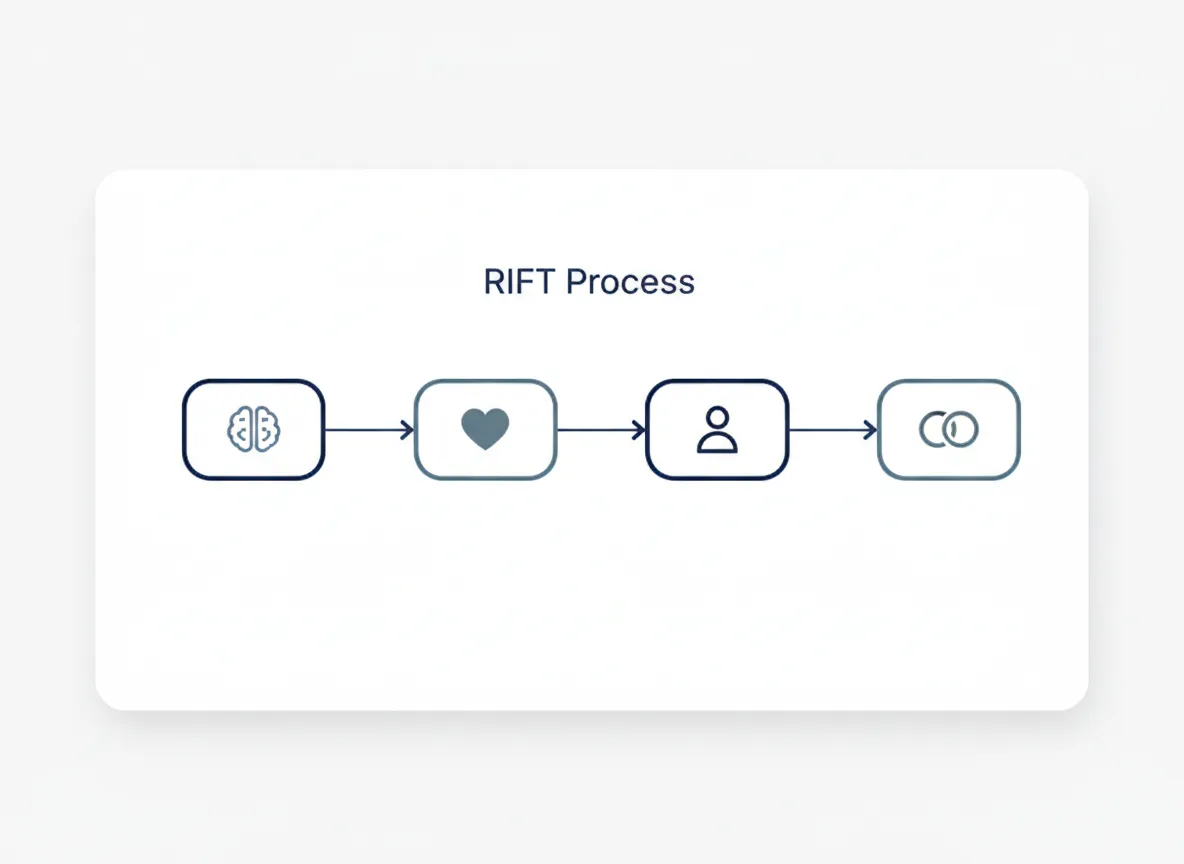
Thoughts → Feelings → Identity → Relationships
Four stages. One goal: get you through this divorce without blowing up your future.
WHY MOST COACHING MISSES THE MARK
The Core Philosophy: Stabilize the Mind First.
Traditional therapy often fails high-achievers in the middle of a divorce because it starts in the deep end: endlessly swimming in feelings. Meanwhile, your life is on fire. Lawyers are billing by the hour. Your phone is blowing up. Every message, every signature, and every conversation has consequences.
When emotions are driving the bus, you get reactive texts, late-night calls you regret, and legal decisions that cost you years of income. You’re smart enough to know better, but in the moment, the nervous system wins.
High-performers don’t need more emotional chaos. They need a way to stabilize their thinking so every move is deliberate, not destructive. That’s why the RIFT Process starts where most approaches end: with your thoughts.
Once your mind is anchored, we can process the emotion without it hijacking your decisions, your parenting, or your long-term positioning. Feelings matter—but strategy comes first.
THE RIFT RECOVERY PROCESS
A 4-step system, not an open-ended conversation.
Think of RIFT as a structured turnaround plan for your life during and after divorce. We move in order, on purpose. Each stage builds on the last so you’re not just surviving this season—you’re using it to build the next version of you.
STEP 1 · THOUGHTS
The Anchor: stop the mental free-fall.
This is where we start. Your thinking is the operating system for everything else. We identify the catastrophic stories running in the background—“I’m going to lose everything,” “I’m failing my kids,” “This will never end”—and pressure-test them against reality.
We lock in strategic clarity: what matters, what doesn’t, and what you’re no longer willing to do. This alone stops a huge amount of bleeding—fewer reactive messages, fewer emotional U-turns, fewer expensive mistakes.
STEP 2 · FEELINGS
The Processing: emotion without chaos.
Once the mind is steady, we deal with the emotional toll. Not by wallowing, but by giving your nervous system a structured way to discharge what you’re carrying—grief, anger, shame, fear—so it doesn’t leak into every email, court date, or pickup/drop-off.
You learn simple, repeatable tools to feel what you’re feeling without letting it run the show. That means fewer emotional hangovers and more calm follow-through on the plan you committed to.
STEP 3 · IDENTITY
The Rebuild: who you are after this.
Divorce doesn’t just end a relationship; it blows up the story you’ve been living inside. Titles, roles, routines, even your sense of being a “good” partner or parent get put on trial.
Together, we rebuild your identity outside the marriage—as a leader, an individual, and a parent. You’ll define who you are, what you stand for, and how you operate going forward, so you’re not dragging old patterns into your next chapter.
STEP 4 · RELATIONSHIPS
The Future: boundaries, co‑parenting, and standards.
Once your thoughts, emotions, and identity are aligned, we turn to the relationships that will define your next decade: with your ex, your kids, future partners, and yourself.
We build ironclad boundaries, a practical co‑parenting playbook, and clear standards for how you engage going forward. The goal isn’t to “win” the divorce; it’s to protect your long-term reputation, your capacity to lead, and the environment your kids grow up in.
See the whole arc at a glance.
Below is a visual snapshot of the RIFT timeline—a clean progression from immediate stabilization to long-term positioning. In practice, we move quickly, but never randomly.
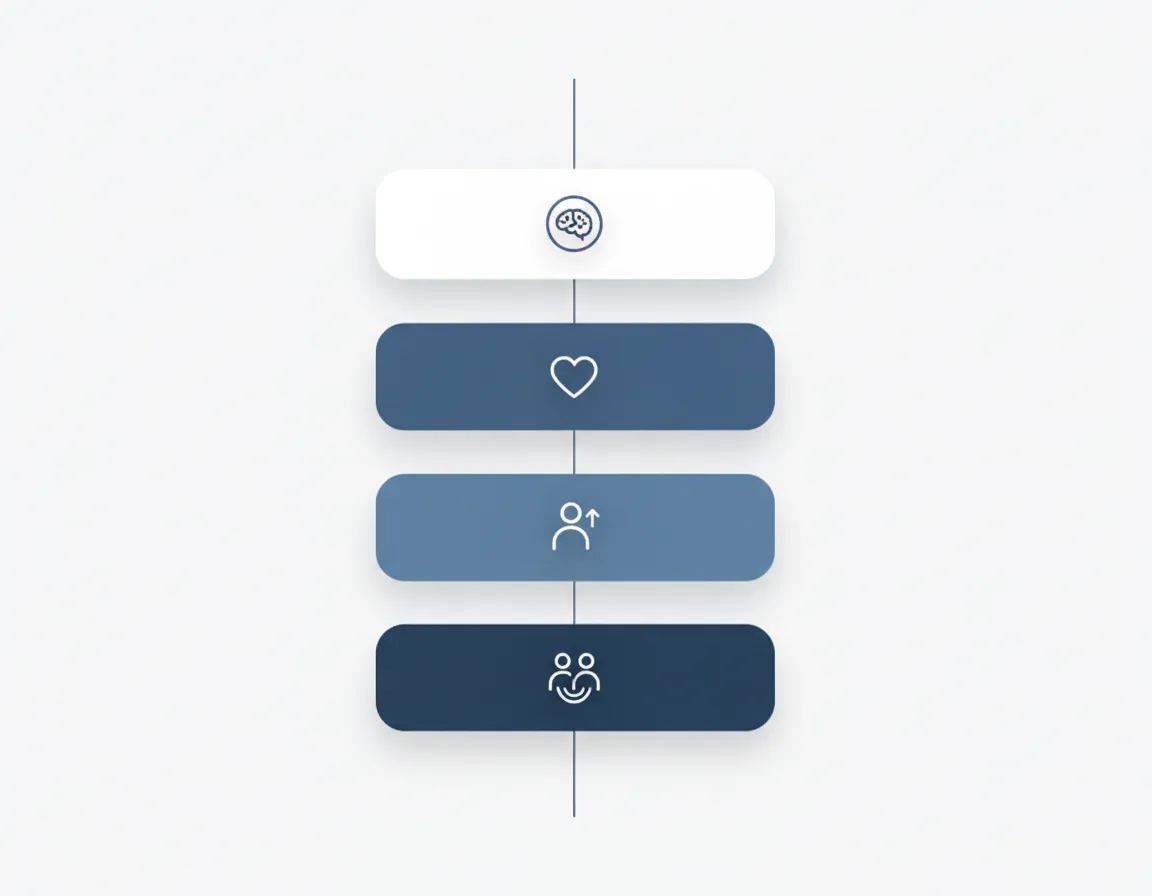
Every session, exercise, and conversation plugs into this structure so you always know where you are and what we’re aiming at next.
THE BOTTOM LINE
This only works if you do.
The RIFT process is the exact framework outlined in the Rebuilders Divorce Recovery Workbook. It works because it demands accountability. No one can do the push-ups for you—but you also don’t have to guess what to do next.
If you’re ready to treat this like the high-stakes transition it is—and do the work required to come out stronger—then the next step is straightforward.
No pressure. No drama. Just a private, direct conversation about where you are, what’s at risk, and whether this system is the right fit.